
Rai Kedarnath Marg.
A clean, sustainable, pedestrian-first heritage street model — reimagining mobility, sanitation, comfort, and public experience in one of India's most historic urban corridors.
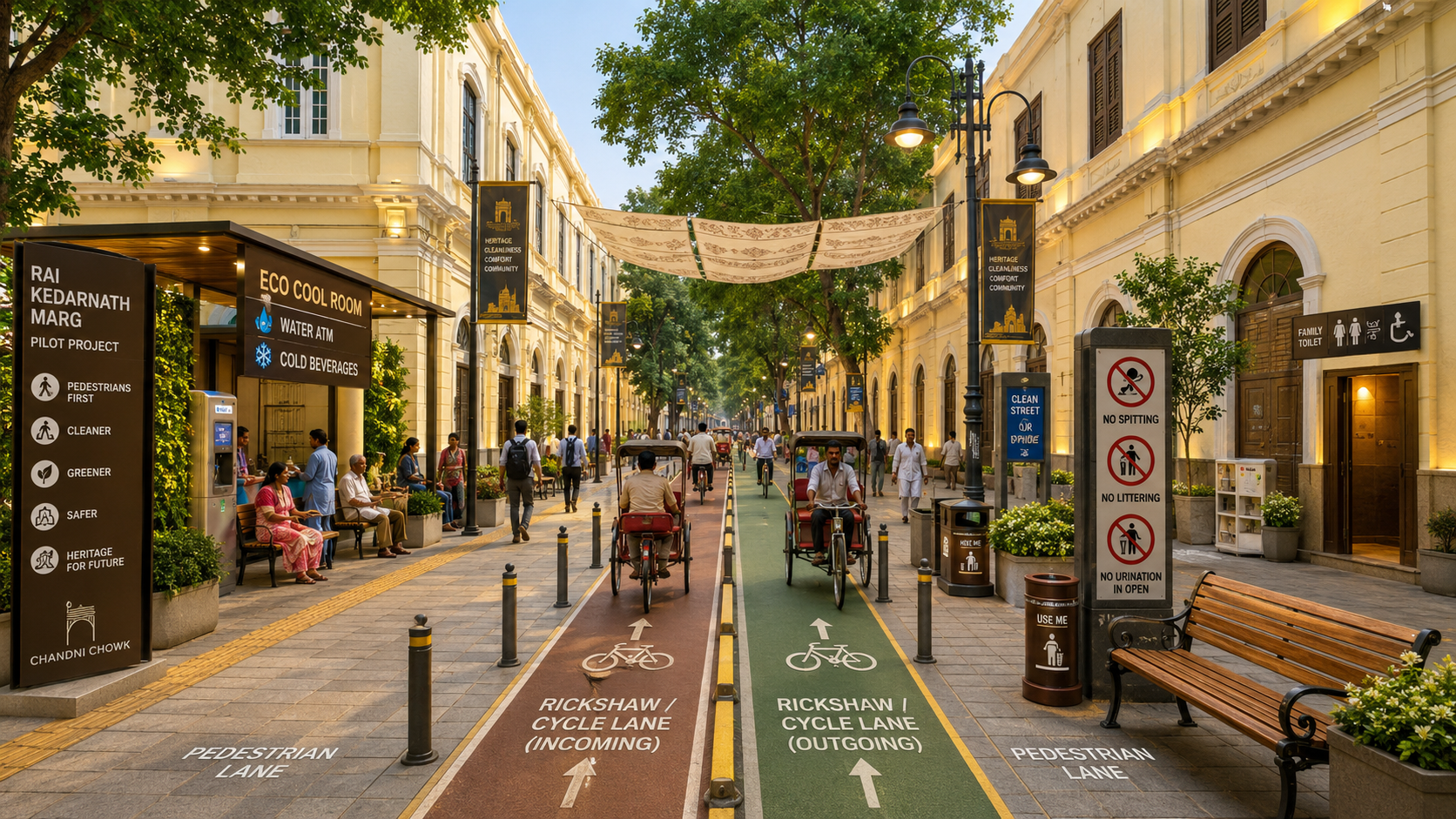
What this project sets out to achieve.
- 01Remove private cars from the street corridor
- 02Improve pedestrian comfort and safety
- 03Organise last-mile and non-motorised mobility
- 04Create cleaner public sanitation infrastructure
- 05Reduce littering, spitting, and open urination
- 06Improve visual identity and civic behaviour
Independently measurable. Collectively transformative.
Access Control & Entry System
Smart boom gate, valet parking zone, and a structured rickshaw transfer station — establishing a true car-free zone with dignity and ease.
Street Redesign: The 7-Metre Corridor
Four functional movement lanes — two 1.75m pedestrian walkways flanking two 1.75m segregated rickshaw lanes.
Eco Comfort & The Urban Pit Stop
Eco Cool Rooms, Water ATMs, continuous shade canopies, mist cooling, and inclusive seating for elders, families, and workers.
Cleanliness & Public Health Infrastructure
Solar smart dustbins every 25m, dedicated spittoons, a family toilet block, and multilingual civic signage backed by enforcement.
Urban Greening & Air Quality
LiquidTree bio-reactor panels, vertical green walls, and micro-landscaping — innovative green systems for a dense heritage environment.
Façade Improvement & Heritage Lighting
Restored facades, uniform bilingual shop signage, and warm pedestrian-level lighting inspired by Mughal-era lantern bazaars.
A round-the-clock cleaning protocol.
Measuring the impact of transformation.
This pilot becomes a scalable framework for transformation across Chandni Chowk and other heritage markets in India — a replicable model for pedestrian-first, heritage-sensitive urban management.